Choosing an industrial vacuum cleaner in 2026 starts with the material you need to collect, not the largest motor on the showroom floor. Fine flour, metal shavings, wood dust, and spilled liquid place different demands on a machine. A unit that handles chips well may clog quickly when used on fine powder. Match the vacuum’s filtration, airflow, capacity, and duty rating to the actual task. Details matter.
The phrase vacuum industrial can lead to a wide range of products, so compare specifications carefully. Check whether the filter suits your dust, how often it needs cleaning, and whether replacement filters are readily available. Consider the work area too: a long hose, tight corners, or frequent movement between stations can make a heavy machine frustrating. For hazardous dust, confirm the equipment is specifically rated for that application and consult a qualified safety professional; general-purpose claims are not enough.
Useful selection also means looking beyond purchase price. Compare maintenance needs, noise, container-emptying methods, and the manufacturer’s documentation. Ask suppliers for performance information that reflects your materials and operating conditions, rather than relying on a broad “industrial grade” label. A checklist helps, but it cannot predict every shift, spill, or awkward corner. That is worth admitting. This guide explains the key choices, questions, and trade-offs so you can narrow options with evidence—and reconsider them when your process changes.
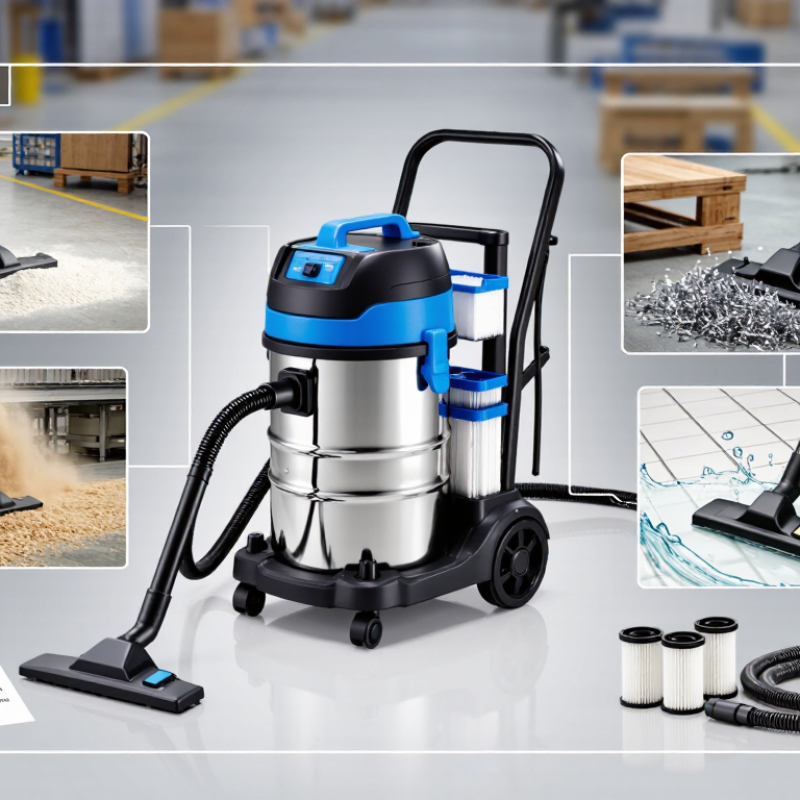
Before comparing vacuum capacity or filtration, list the actual cleaning tasks. Is the machine collecting metal shavings, dry powder, wood chips, liquid spills, or a mix? A few coarse chips behave very differently from fine dust that stays airborne. Note where debris gathers: beneath a cutting table, around a conveyor, or inside narrow equipment enclosures. Also record how often cleanup happens and whether debris arrives steadily or in sudden batches.
Fine dust deserves careful attention. OSHA’s 2008 Combustible Dust National Emphasis Program cited 281 dust-related incidents from 1980 to 2005, with 119 deaths and 718 injuries.
That figure covers varied incidents, but it shows why identifying dust properties matters. Check the material’s safety data sheet and ask whether the waste is combustible, abrasive, damp, or hazardous to breathe.
Keep samples representative. A handful from the floor may not match the dust collected inside a machine. I have seen that assumption miss the point.
Estimate the debris volume per shift, not just the amount visible at one moment. A small bin can fill quickly when a process runs continuously. For liquids, identify whether the spill includes coolants or cleaning fluids, since compatibility affects collection and disposal. Record the largest particles too; long fibers or sharp fragments can clog hoses or damage components. OSHA’s report is a warning, not a selection guide. Still, it supports a practical habit: define the material before choosing the machine.
Before comparing tank sizes, map the material, source, and work pattern in each area. Fine powder from a cutting station behaves differently from damp debris near a washdown zone. Note hose length, bends, pickup height, and whether several operators work at once. These details affect airflow at the nozzle, not just the vacuum’s advertised peak rating. A small tank may mean frequent stops; an oversized unit can be awkward in narrow aisles. Measure a typical shift. It is easy to miss the brief cleanup peaks.
For respirable crystalline silica, OSHA’s 2016 final rule sets an eight-hour permissible exposure limit of 50 micrograms per cubic meter and an action level of 25 micrograms per cubic meter. Those figures make source capture and suitable filtration practical selection criteria, not optional extras. Match the vacuum to the dust assessment and collection method, then verify airflow under real hose and filter conditions. Ask a qualified safety professional to confirm filtration requirements for hazardous dust; ordinary particle filters may not be adequate. Check whether filters clog quickly during production. That detail is often overlooked.
Estimate required collection volume from material generated per shift, then add room for peaks and safe emptying intervals. Compare airflow and static pressure at the intended pickup point, since long hoses and loaded filters reduce performance. Test the unit on the actual material before purchase, if possible. A clean-filter demonstration can be misleading.
| Facility Condition or Task | What to Assess | Practical Starting Point | Selection Considerations |
|---|---|---|---|
| General dry floor and work-area cleanup | Floor area, debris size, cleaning frequency, hose length, and number of operators. | For portable units, compare models in roughly the 100–200 CFM range; a 20–55 gal collection container may suit regular shop cleanup. | Check airflow at the working inlet, not only the motor’s advertised peak figure. A longer or narrower hose can reduce delivered airflow. |
| Fine dust from sanding, grinding, or similar processes | Dust particle size, whether dust is captured at the tool, exposure controls, and applicable workplace requirements. | Use source capture where practical. Match the airflow to the tool and ducting; select a high-efficiency final filter, such as a properly rated HEPA filter when required. | Confirm filter efficiency, sealing, cleaning method, and safe dust disposal. A HEPA filter does not by itself make a system suitable for combustible dust. |
| Heavy chips, coarse debris, or intermittent bulk cleanup | Debris dimensions, bulk density, pickup distance, and whether a separator can protect the main filter. | Prioritize an unobstructed intake, suitable hose diameter, and a container sized for the expected debris volume; a pre-separator can reduce filter loading. | Check inlet and hose dimensions to prevent clogging. For heavy material, verify container strength and safe emptying procedures. |
| Liquid pickup or wet cleanup | Liquid type, expected volume, floor drains, spill-control procedures, and whether solids may be present. | Choose a unit explicitly designed for wet pickup, with an appropriate liquid shutoff or level-control system and a tank sized for the largest likely cleanup. | Verify compatibility with the liquid and electrical-safety requirements. Do not vacuum flammable or reactive liquids unless the equipment is specifically designed and approved for that service. |
| Long hose runs or high-resistance ducting | Hose length and diameter, bends, fittings, elevation changes, and the number of active pickup points. | Compare airflow and static pressure together, using performance data at the intended operating point. | High airflow alone does not guarantee effective pickup. Ask for a fan curve or performance table and account for pressure losses across hoses, filters, and separators. |
| Extended or continuous operation | Hours per shift, motor cooling, ambient temperature, filter-cleaning interruptions, and maintenance access. | Select a model rated for the intended duty cycle; consider continuous-duty equipment for frequent or long-duration operation. | Review motor and filter service intervals, replacement-filter availability, collection capacity, and the time required to empty or clean the unit. |
| Combustible dust or hazardous materials | Dust composition, ignition hazards, process conditions, and applicable local safety regulations. | Have the hazard assessed before selecting equipment; specify a system designed for the identified material and installation conditions. | Ordinary industrial vacuums may create ignition or exposure risks. Verify required certifications, grounding, filtration, and disposal controls with a qualified safety professional. |
| Facility power, noise, and mobility limits | Available voltage and phase, circuit capacity, operating noise, doorway widths, floor loading, and travel routes. | Match the electrical supply and plug configuration to the facility. Compare sound ratings and unit dimensions before purchase. | Confirm the circuit can support the starting and running load. Consider cord length, wheel design, lifting points, and storage space. |
Planning note: These figures are screening guidance, not final equipment specifications. Required capacity depends on the material, pickup tool, hose or duct layout, filter condition, and applicable safety requirements. Confirm the operating-point performance with the equipment supplier or a qualified engineer.
Match Filtration and Safety Features to Workplace Hazards
Start with the material, not the machine’s advertised power. Fine mineral dust, wood particles, liquid spills, and metal shavings create different demands. Check the dust’s safety data and your workplace risk assessment before choosing filtration. A suitable filter captures particles without quickly clogging or releasing them back into the room. For fine hazardous dust, confirm the complete system’s filtration performance, seals, and maintenance procedure—not just the filter label. Small details matter.
Safety features should match the actual hazard. If dust may be combustible, ordinary collection equipment could create an ignition risk. Select equipment specifically assessed for that environment, with guidance from a qualified safety professional. For wet pickup, verify that the unit is designed for liquids and has appropriate electrical protection. Check grounding, hose compatibility, and safe disposal requirements where relevant. Do not guess. A powerful motor cannot make an unsuitable vacuum safe.
Tips: Ask what particles escape during filter changes. Check how often filters need replacement and whether workers can change them safely. A practical trial can reveal awkward hoses, poor access, or reduced suction during a real shift. Keep the task in mind: selection can look obvious on paper, then prove less so beside a crowded production line. Follow the equipment instructions and your site’s safety procedures.
Choosing an industrial vacuum cleaner in 2026 starts with the material and mess it must handle.
A dry-only unit suits routine dust and debris, while a wet-dry model can manage occasional liquid spills. Canister units are easier to move between work areas; fixed systems may suit facilities with repeated cleaning routes. For fine dust, check the filtration specification and how the filter is cleaned or replaced. A strong motor rating alone does not prove effective pickup.
That matters.
Compare power sources against real operating conditions. Corded models provide steady power but can restrict movement around benches and equipment. Battery-powered units offer flexibility, though runtime may fall when suction is high or filters are clogged.
Check the filter. Estimate total cost using purchase price, electricity or battery replacement, bags, filters, and routine service—not just the sticker price. Ask suppliers for expected filter life under your dust load, and test a unit on a representative shift if possible.
Estimates can still miss real-world variation. A vacuum that looks economical on paper may need frequent filter changes in a dusty workshop.
Choose for the mess you actually have.
Before comparing airflow and tank capacity, verify that the vacuum suits the material and worksite. Check applicable safety and equipment requirements in your region, and request current documentation rather than relying on a verbal assurance. For fine or hazardous dust, confirm the unit’s documented suitability, filtration arrangement, and safe collection method. A label alone is not enough. Match the specification to the actual task, not an idealized test condition.
Maintenance needs can shape the real cost of ownership. Ask how often filters, seals, and hoses need inspection or replacement, and whether staff can reach them without special tools. Check replacement-part availability and the recommended cleaning procedure. A unit that performs well on day one may disappoint when filters clog during a busy shift. That detail is easy to miss. Trial the vacuum with representative debris where practical, and record how quickly routine servicing takes.
Supplier support deserves the same scrutiny as the machine. Ask who handles technical questions, what response times are typical, and whether service guidance and parts lists are provided in writing. Clarify warranty limits, operator training, and repair options before purchase. A polished proposal can still leave gaps. I would compare specific commitments, not just assurances, while remembering that even a careful checklist cannot predict every maintenance problem.