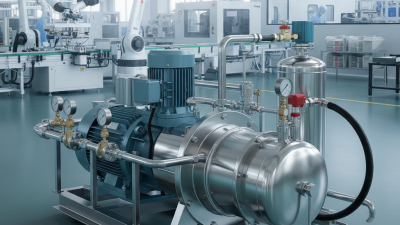
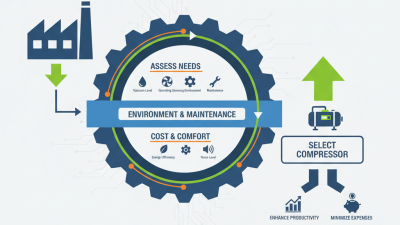
Choosing the best high vacuum pump manufacturers and suppliers in China requires more than comparing prices. A reliable supplier should understand vacuum applications, material compatibility, pumping speed, ultimate pressure, and maintenance requirements. These details affect coating systems, semiconductor equipment, laboratory instruments, freeze dryers, and industrial processing lines. A pump may appear powerful on paper, yet perform poorly under heat, vapor, or continuous operation.
This guide examines Chinese manufacturers through practical purchasing criteria. It considers product range, manufacturing experience, testing procedures, certifications, customization ability, technical support, and export reliability. Factory audits, sample testing, and direct engineering discussions can reveal important differences. Ask for performance curves, leak-test records, replacement-part availability, and clear warranty terms. Small details matter.
Not every supplier deserves the same confidence. Some websites provide limited technical evidence. Others rely on broad claims without showing test conditions. That should encourage careful review, not immediate rejection. Our evaluation also recognizes real-world concerns, including delivery changes, communication gaps, and imperfect documentation. Experience suggests that the “best” supplier depends on your vacuum level, gas load, operating cycle, and budget. A laboratory may need quiet, stable equipment, while a coating plant may prioritize durability and service speed. This introduction helps buyers compare options with greater clarity and fewer assumptions. Expect useful findings, but verify critical specifications independently before placing an order.
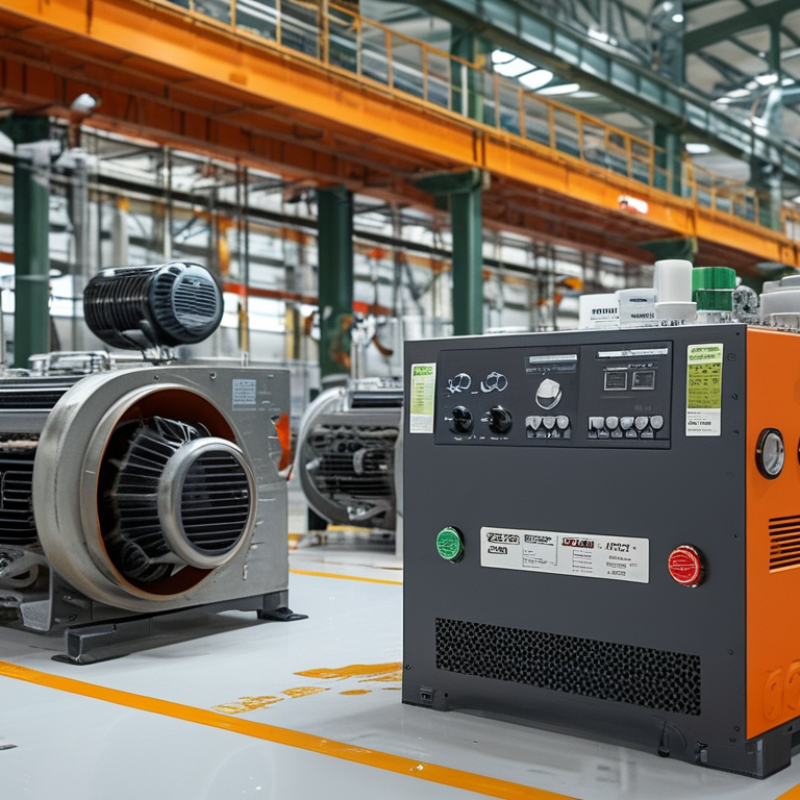
Choosing a high-vacuum pump supplier in China requires more than comparing catalog prices. In practice, the target pressure must match the process, chamber volume, gas load, and cleaning standard. A pressure of 10⁻³ mbar suits many high-vacuum applications, while 10⁻⁹ mbar demands cleaner materials, better seals, and strict outgassing control. These ranges are not interchangeable. A pump may reach its quoted ultimate pressure only under laboratory conditions. That detail is often missed.
Pumping speed, usually measured in m³/h or L/s, describes gas removal near the pump inlet. Effective speed at the chamber can be lower because valves, bends, and narrow piping reduce conductance. Ask suppliers for speed curves, ultimate pressure, compression ratio, leak-rate data, and test-gas details. Throughput clarifies real performance because gas load equals pressure multiplied by pumping speed. For example, a 100 L/s pump at 10⁻⁵ mbar handles a different load than the same pump at 10⁻³ mbar. Measurement method matters. One impressive number is not enough.
Tips: Request a complete datasheet and vacuum test record. Confirm oil compatibility, vibration, noise, service intervals, spare parts, and controller requirements. Check whether testing used nitrogen or another gas. Small differences can create expensive delays. I would also question unusually perfect claims; actual vacuum systems rarely behave perfectly.
China’s high-vacuum pump supplier landscape is broad, but compliance separates capable manufacturers from simple traders. The ISO Survey 2022 recorded 1,265,216 ISO 9001 certificates worldwide. This figure shows the system’s scale, not automatic product quality. Buyers should verify the certificate’s scope, issuing body, factory address, and expiration date. A useful audit also checks helium leak records, ultimate pressure tests, calibration traceability, and corrective-action reports.
Evidence matters more than logos.
CE marking requires careful interpretation. It is not a universal quality certificate or a government approval stamp. Under European Commission guidance, the manufacturer must identify applicable directives, complete conformity assessment, prepare technical documentation, and issue a Declaration of Conformity. For vacuum equipment, electrical safety, electromagnetic compatibility, machinery, and pressure-related requirements may apply. The exact duties depend on design and intended use. Ask for the declaration, risk assessment, test reports, and a matching model number.
Export compliance needs equal attention. The WTO World Trade Statistical Review 2023 reported merchandise trade exceeding 24 trillion US dollars, highlighting the complexity of cross-border documentation. Suppliers should provide accurate HS classification, country-of-origin details, commercial invoices, packing lists, and end-use information. Some advanced pumps may require additional review under destination-country dual-use rules, depending on specifications and application. A certificate alone can mislead. I would also compare published performance with independent acceptance testing, because catalog values sometimes reflect ideal laboratory conditions rather than production-floor results.
China Best High Vacuum Pump Manufacturers Suppliers?
Comparing manufacturers requires more than reading a maximum pumping-speed label. ISO 21360-1:2016 defines a common method for measuring vacuum-pump performance. It requires controlled gas flow, pressure, temperature, and inlet conditions. Ask suppliers for complete test curves, not one attractive number. A pump rated at 1,000 L/s may deliver far less at your operating pressure.
Check the gas type carefully. Nitrogen data cannot automatically represent water vapor, hydrogen, or process gases. Compare pumping speed, ultimate pressure, power consumption, and measurement uncertainty at identical pressure points. ISO 21360-2:2012 also supports performance testing for positive-displacement pumps. The 2023 VDMA Vacuum Technology market report identifies energy efficiency and digital monitoring as growing purchasing criteria. That matters because a lower-speed pump may still reduce operating cost. I would not trust efficiency claims without electrical input data and test conditions.
Tips: Request the original ISO test report. Check whether speed is measured at the pump inlet. Confirm the pressure range. Ask for service intervals and replacement-part availability. Record the acceptance test in your purchase contract. One detail is often missed: inlet screens and valves can reduce effective speed. A clean laboratory curve may not match a dusty production line. This is where supplier experience becomes visible. Reliability evidence should include field hours, leak-test records, and documented calibration dates. The comparison may feel slower, but it prevents a costly mismatch.
| Pump Technology | Typical Nominal Pumping-Speed Range | ISO 21360 Reporting Unit | Typical Ultimate Pressure Range | Recommended ISO 21360 Test Gas | Useful Test Pressure Points | Key Performance Metric to Compare | Common Application Area |
|---|---|---|---|---|---|---|---|
| Oil-Sealed Rotary Vane Pump | 2–100 m³/h | m³/h or L/s | Approximately 10-3–10-2 mbar, depending on design and gas ballast condition | Nitrogen or another defined test gas | Atmospheric pressure down to the specified operating limit | Effective pumping speed versus inlet pressure, ultimate pressure, oil backstreaming, and gas-ballast performance | General laboratory vacuum, freeze drying, coating pre-pumping, and industrial rough vacuum |
| Dry Scroll Pump | 1–50 m³/h | m³/h or L/s | Approximately 10-2–10-1 mbar | Nitrogen or another defined test gas | Atmospheric pressure, mid-range pressure, and near ultimate pressure | Pumping-speed stability, ultimate pressure, low particle generation, and tip-seal service interval | Clean laboratory systems, electron microscopy, analytical instruments, and semiconductor support equipment |
| Dry Screw Pump | 20–1,000 m³/h | m³/h or L/s | Approximately 10-2–10-1 mbar | Nitrogen or another defined test gas | Atmospheric pressure to the rated continuous operating pressure | Water-vapor tolerance, corrosive-gas capability, pumping speed under load, and power consumption | Vacuum furnaces, chemical processing, packaging, and industrial central vacuum systems |
| Diaphragm Pump | 0.5–10 m³/h | m³/h or L/s | Approximately 1–10 mbar | Nitrogen or another defined test gas | Atmospheric pressure down to the specified ultimate-pressure region | Oil-free operation, chemical resistance, flow stability, and ultimate pressure | Filtration, rotary evaporation, laboratory instrumentation, and backing for small high-vacuum systems |
| Roots Vacuum Booster | 100–5,000 m³/h | m³/h or L/s | Typically used with a backing pump; booster-only pressure depends on differential-pressure limits | Nitrogen or another defined test gas | Specified inlet pressure, usually with a backing pump operating simultaneously | Compression ratio, maximum differential pressure, pumping speed curve, and allowable start-up pressure | Vacuum drying, metallurgy, distillation, coating, and large-volume industrial vacuum systems |
| Turbomolecular Pump | 50–5,000 L/s | L/s or m³/h | Approximately 10-10–10-7 mbar, depending on pump type and system conditions | Nitrogen; hydrogen and helium may also be reported separately | Typically from the high-vacuum operating region down to the minimum measurable pressure | Nitrogen pumping speed, compression ratio, rotational speed, vibration, and required backing pressure | High-energy physics, surface analysis, electron microscopy, thin-film deposition, and research vacuum systems |
| Hybrid Turbo-Drag Pump | 50–1,500 L/s | L/s or m³/h | Approximately 10-9–10-7 mbar | Nitrogen, with optional hydrogen or helium data | High-vacuum region through the specified maximum backing pressure | Compression ratio for light gases, pumping speed, backing-pressure tolerance, and vibration level | Analytical instruments, leak detection, research chambers, and compact high-vacuum equipment |
| Cryogenic Pump | 1,000–50,000 L/s for condensable gases | L/s | Approximately 10-8–10-10 mbar after suitable regeneration and conditioning | Nitrogen, argon, hydrogen, or another specified gas | Gas-specific measurement at the cryogenic operating temperature | Gas-specific pumping speed, sorption capacity, regeneration interval, and performance at thermal load | Particle accelerators, space simulation, fusion research, and large high-vacuum chambers |
How to compare suppliers: Request the complete pumping-speed curve rather than a single nominal value. The comparison should state the test gas, inlet pressure, gas temperature, conductance between the pump and test point, measurement uncertainty, ultimate pressure, and whether the result is measured at the pump inlet or calculated from a system specification.
Reference framework: ISO 21360 series for the measurement of pumping speed of vacuum pumps. The performance ranges above are technology-level engineering reference ranges, not brand-specific claims; actual values vary with pump size, configuration, gas load, temperature, conductance, and test conditions.
China Best High Vacuum Pump Manufacturers Suppliers?
Selecting a vacuum pump starts with the process, not the catalog. Turbomolecular pumps suit clean high and ultra-high vacuum applications. They use fast rotors and require a suitable backing pump. Vibration control matters.
Diffusion pumps offer strong pumping speed at lower equipment cost. However, they use working fluid and need proper baffles. Oil migration can damage sensitive processes. Dry screw pumps provide oil-free rough vacuum service. Their wide gas-handling capacity supports coating, drying, and industrial chambers. Scroll pumps are compact, quiet, and clean. They often work well as backing pumps or laboratory vacuum sources. Very practical.
When comparing Chinese manufacturers and suppliers, request actual pumping curves, ultimate pressure data, and leak-test records. Ask how the figures were measured. A number without test conditions proves little. Check rotor balancing, material quality, seals, controllers, and replacement-part availability. Service response also matters during commissioning.
A perfect choice rarely exists. A scroll pump may struggle with heavy vapor loads. A diffusion pump may be unsuitable near oil-sensitive products. Dry screw units can require careful maintenance in dusty processes. Confirm chamber volume, gas composition, cycle time, and required pressure before ordering. In my view, suppliers deserve trust when they explain limitations clearly, not when they promise impossible performance. Small details decide reliability.
This comparison presents representative ultimate-pressure levels for four widely used high-vacuum pump technologies. Lower pressure indicates a deeper achievable vacuum. Actual performance depends on pump size, configuration, gas load, temperature, and system design.
Note: The values shown are typical engineering reference points rather than company or brand specifications. Turbomolecular and diffusion pumps generally achieve the deepest vacuum, while dry screw and scroll pumps are commonly used for backing, roughing, and clean vacuum applications.
A reliable supplier should prove performance with measured data. During supplier audits, request a leak rate in mbar·L/s, not a vague “high vacuum” claim. Ask for the test method, detector sensitivity, gas, temperature, and acceptance limit. Results without conditions are weak evidence. Check whether the figure describes the pump, inlet flange, or complete system. Those measurements are not interchangeable.
MTBF can support comparison, but it is not a guarantee. Confirm the operating load, duty cycle, ambient temperature, and maintenance assumptions behind the figure. A pump running clean gas intermittently may show a very different MTBF from one handling moisture daily. Request service records, spare-parts lead times, technician coverage, and remote troubleshooting procedures. A fast response can matter more than a small purchase-price difference. Ask how calibration and performance verification are documented.
Evaluate total cost over five years. Include electricity, oil or seal replacement, filters, installation, training, calibration, downtime, and disposal. Obtain written warranty limits and exclusions. A supplier with limited local support may still be suitable, but the risk should appear in your calculation. One weakness in many evaluations is trusting polished certificates too quickly. Inspect sample reports, speak with operating users, and test a production-representative unit when possible. Lowest price is often the least complete number.