
What is an Oil Less Vacuum Pump and How Does It Work?
In the realm of vacuum technology, the oil less vacuum pump stands out for its innovative design and functionality. Renowned expert Dr. John Smith, a leading figure in the industry, states, “The oil less vacuum pump revolutionizes how we achieve vacuum levels without contamination.” This statement highlights the significance of these pumps in various applications.
Oil less vacuum pumps eliminate the use of oil, making them cleaner and more efficient. They are favored in industries where purity is crucial, such as pharmaceuticals and food processing. With no oil to leak or contaminate, these pumps ensure high-quality output. However, their performance can vary based on specific operating conditions.
Potential users should consider the pump’s limitations. For instance, while they are efficient for many tasks, they may struggle with high volumes. Balancing costs with benefits is essential. Investing in an oil less vacuum pump might not always be the best decision. Consider all factors before choosing the right pump for your needs.
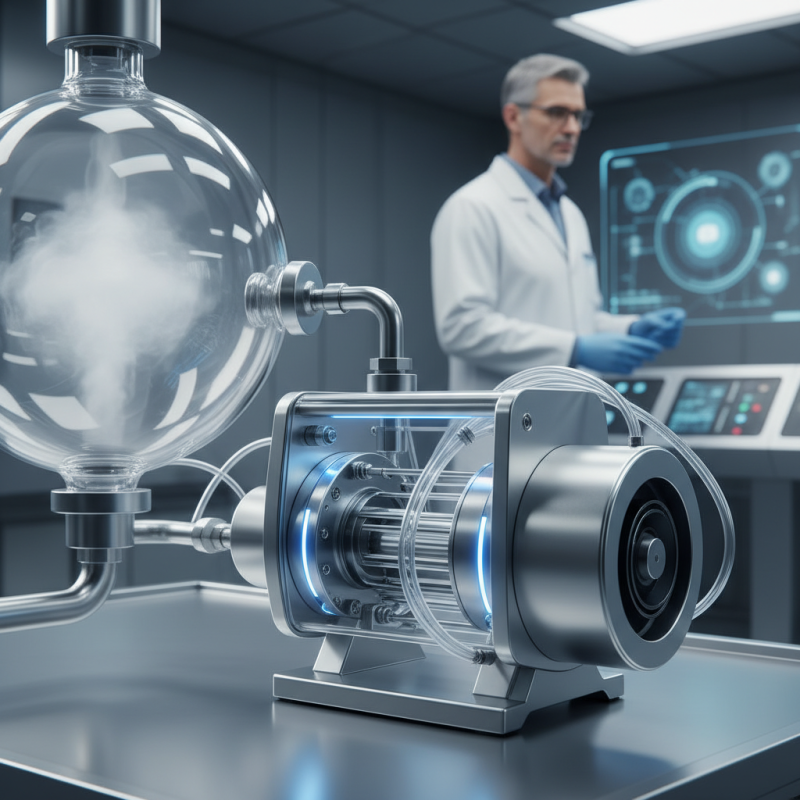
What is an Oil Less Vacuum Pump? Definition and Key Features
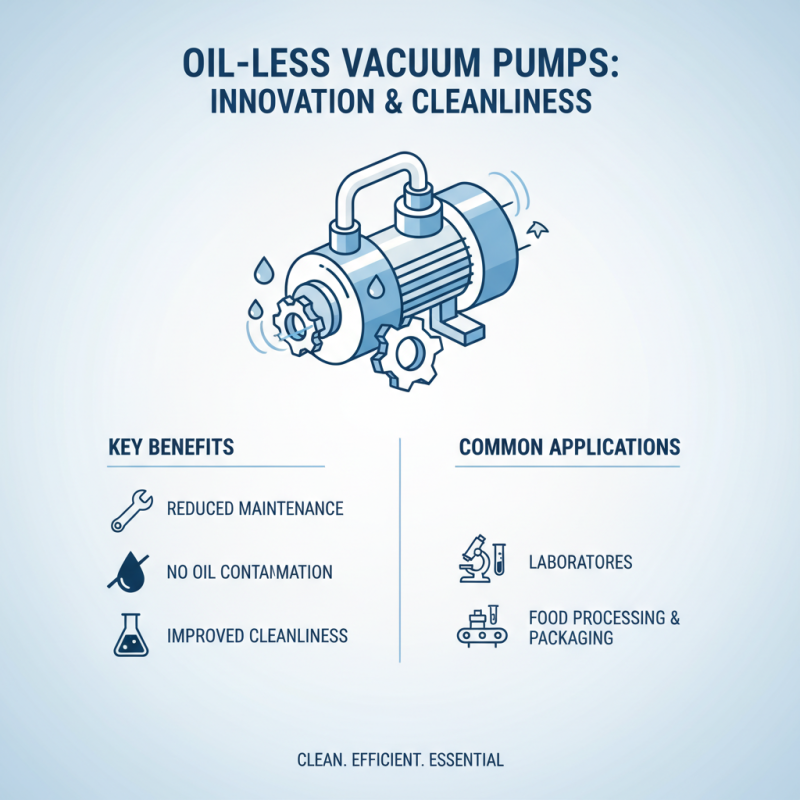
An oil-less vacuum pump is a special type of pump. Unlike traditional pumps, it does not require oil for operation. This feature makes it ideal for applications needing clean environments. Laboratories and food industries often rely on oil-less pumps for their cleanliness and efficiency.
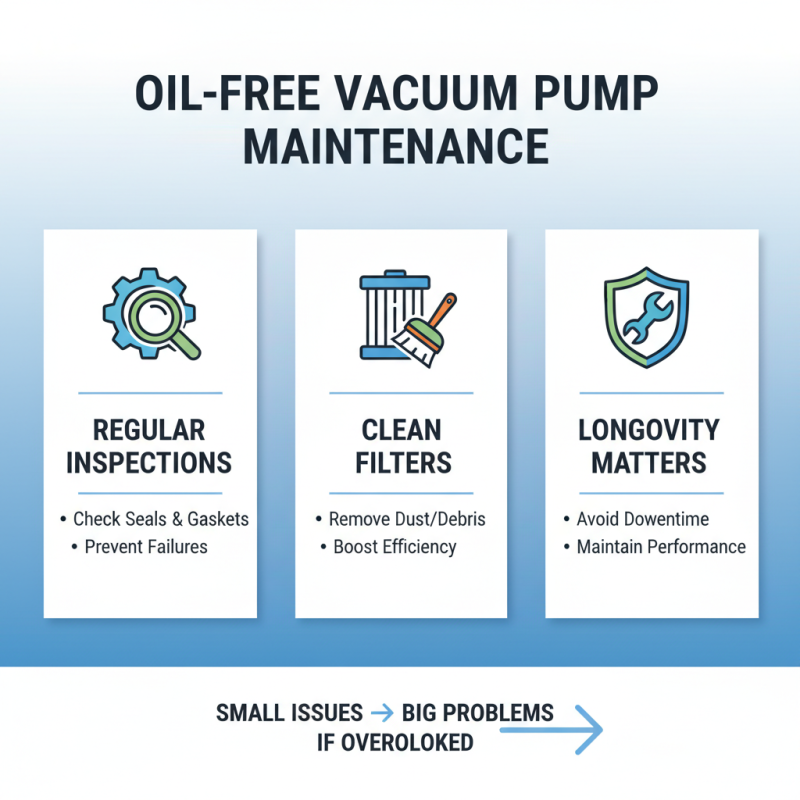
One key aspect of oil-less vacuum pumps is their design. They utilize materials that can withstand wear without lubrication. This leads to reduced maintenance needs. However, these pumps can generate more heat than oil lubricated ones. It is essential to monitor their temperature regularly. Users may need to consider their heat dissipation methods.
While oil-less vacuum pumps offer many benefits, they are not without challenges. The initial cost can be higher compared to conventional pumps. Some users may find the noise levels more pronounced, depending on the model. Evaluating these factors is crucial before making a decision. Overall, understanding the characteristics of oil-less vacuum pumps can guide better choices for specific applications.
What is an Oil Less Vacuum Pump and How Does It Work?
| Feature | Description |
|---|---|
| Operation Method | Uses mechanical or diaphragm technology to create a vacuum without oil. |
| Applications | Commonly used in laboratories, food packaging, and medical equipment. |
| Advantages | No oil contamination, lower maintenance, and less environmental impact. |
| Disadvantages | Generally lower ultimate vacuum levels compared to oil-sealed pumps. |
| Maintenance | Requires periodic checks and may need diaphragm replacement over time. |
| Typical Vacuum Level | Can achieve vacuum levels up to approximately 10^-3 torr. |
| Noise Level | Operates quieter than oil-based vacuum pumps. |
Related Posts
-
Unlocking Efficiency: The Science Behind Dry Rotary Vane Vacuum Pumps and Their Industry Applications
-
How to Choose the Right Oil Vacuum Pump for Your Needs?
-
Understanding the Advantages of Liquid Ring Vacuum Pumps in Modern Industrial Applications
-

Understanding the Essential Role of Oil Vacuum Pumps in Industrial Applications
-

Top 2025 Compressor Vacuum Pump Trends and Innovations You Should Know
-
Why Are Compressor Vacuum Pumps Essential for Efficient Industrial Operations?