What Are the Latest Innovations in Air Tech Technology?
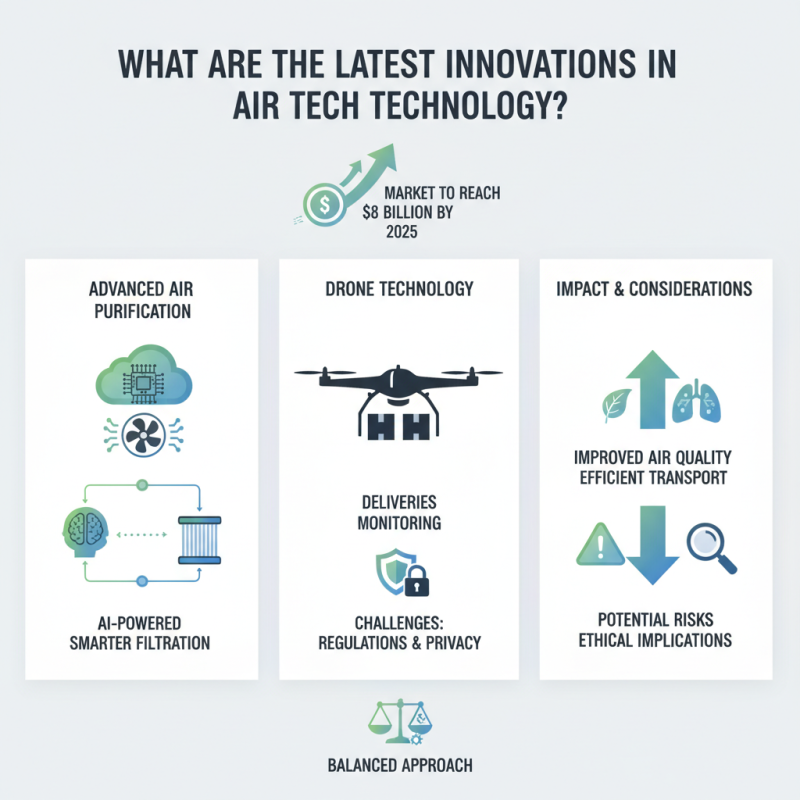
The air tech industry is rapidly evolving, pushing the boundaries of innovation. Recent reports indicate that the market for air tech solutions is expected to reach $8 billion by 2025. Companies are focusing on developing advanced technologies that address environmental concerns. For instance, new air purification systems are now equipped with AI, enabling smarter and more effective filtration processes.
Moreover, advancements in drone technology illustrate a significant leap in air tech capabilities. Drones are increasingly being utilized for deliveries, monitoring, and even security tasks. However, challenges remain, particularly regarding regulations and privacy issues. These aspects require ongoing attention to ensure public trust and safety.
As we delve into the latest innovations, it’s essential to reflect on the impact of air tech on our daily lives and the environment. While these advancements promise improved air quality and efficient transportation, we must also consider potential risks and ethical implications that accompany rapid technological growth. Reports highlight the need for a balanced approach to embracing air tech solutions.
Recent Advances in Air Quality Monitoring Technologies
Recent advancements in air quality monitoring technologies are transforming how we understand our environment. New sensors are now smaller and more affordable. They can detect pollutants like particulate matter and volatile organic compounds. Some devices can connect to smartphones, providing real-time data. This allows users to monitor air quality instantly.
As people become more aware of air pollution, these technologies are essential. They help identify pollution hotspots and track changes over time. However, while these advancements are exciting, they require public trust. Data privacy concerns surface when using personal devices. Transparency in data usage needs to improve. It is vital to ensure users feel safe and informed.
Tips: Regularly check air quality reports. Use monitoring devices to tailor your activities, such as exercising outdoors. Consider ventilation in your home based on real-time data. While technology advances, we must stay vigilant about ensuring its responsible use. The balance between innovation and ethics is key to a healthier future.
Innovative Air Purification Solutions for Urban Environments
Urban air quality is a growing concern. Innovative air purification solutions are emerging to tackle pollution in cities. Many of these solutions are designed to be both effective and aesthetically pleasing. For instance, modular air filters can be integrated into buildings. They look like art installations but work to clean the air.
Another exciting development is the use of natural materials. Researchers are exploring the power of plants to purify air. Biophilic designs can enhance indoor environments. Vertical gardens and green walls act as natural air filters. However, the maintenance of these systems can be challenging. Ensuring the health of the plants requires consistent care.
Moreover, smart technology is increasingly involved. Sensors monitor air quality in real-time. They send alerts when pollution levels rise. Yet, reliance on tech can sometimes lead to complacency. People may overlook basic solutions, like opening windows. Balance is key. As we embrace innovation, we must not forget the simplest forms of fresh air.
Emerging Trends in Smart HVAC Systems
The rise of smart HVAC systems has transformed air tech technology in recent years. These systems utilize advanced sensors and algorithms for better energy efficiency. According to a recent report, smart HVACs can reduce energy consumption by up to 30%. This innovation not only saves money but also reduces environmental impact.
However, the integration of artificial intelligence in these systems is not without challenges. Data privacy concerns loom large as more devices connect to the internet. Many users are unsure about how their data is used. A survey found that 40% of consumers are wary of smart technology due to privacy issues. Transparency and trust remain key areas for improvement.
Moreover, while smart controls enhance convenience, they can complicate user experience. Technical glitches can lead to discomfort, proving that not all innovations meet expectations. There is also a gap in consumer education about HVAC systems. Many users do not fully understand how to optimize system settings for efficiency and comfort. Overall, while smart HVAC systems offer great promise, these issues suggest a need for further refinement and user engagement.
Latest Innovations in Air Tech Technology
This bar chart illustrates the percentage of adoption of various emerging technologies in smart HVAC systems based on recent market research data. The data reflects trends observed in the last year regarding how these technologies are being integrated into air tech systems.
Breakthroughs in Sustainable Aviation Technologies
Sustainable aviation technologies are advancing rapidly. Researchers are exploring alternative fuels derived from waste materials. These biofuels promise less carbon emissions. They can power existing aircraft without major modifications. However, the production process still requires significant energy.
Electric propulsion is another exciting innovation. Battery technology has improved, allowing for more efficient power storage. Small aircraft can already operate on batteries. But larger planes face challenges. Weight and energy density remain obstacles. More research is needed to make electric flight viable for commercial use.
New designs are emerging for greener aircraft. Concepts feature improved aerodynamics to enhance fuel efficiency. Some focus on hybrid systems, combining traditional engines with electric ones. Yet, achieving widespread acceptance remains difficult. The industry grapples with regulations and safety concerns. Each innovation presents potential, yet reality often lags behind expectations.
New Frontiers in Airborne Drone Applications
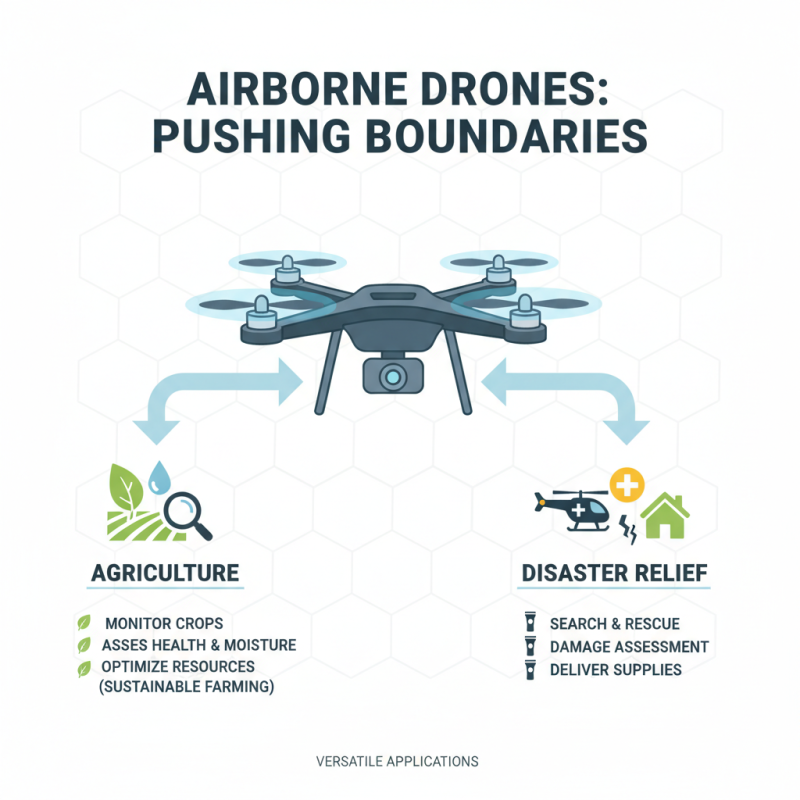
Airborne drones are pushing boundaries in various industries. Their applications are vast, ranging from agriculture to disaster relief. Farmers use drones to monitor crops, assessing health and moisture levels. This aids in sustainable farming by optimizing resource use.
In disaster situations, drones play a crucial role. They provide real-time aerial imagery for rescue operations. This technology helps emergency services pinpoint areas needing immediate attention. Understandably, challenges exist, such as navigation in complex environments. These require constant improvements and adjustments in drone technology.
**Tips:** Consider drone safety and regulations. Ensure you are aware of local laws before flying. Regular training is essential for operators to enhance skills. This ensures effective and responsible usage, minimizing risks. Always be prepared for unexpected scenarios.