Why is Vacuum Oil Essential for Industrial Applications?
In the complex landscape of industrial applications, vacuum oil plays a crucial role. This specialized oil is vital for various manufacturing processes, including lubrication and heat transfer. Its unique properties make it indispensable in environments where precision and efficiency are paramount.
Vacuum oil effectively reduces friction between moving parts, prolonging machinery lifespan. It also assists in preventing overheating, ensuring optimal performance. However, the effectiveness of vacuum oil can be influenced by its quality and the specific demands of different applications. Thus, industry professionals must select the right type carefully.
Despite its benefits, some may underestimate the importance of vacuum oil. It requires proper handling and understanding to maximize its advantages. With the right expertise, users can harness vacuum oil's potential fully, enhancing productivity and safety in operations. Exploring its essential role reveals the often-overlooked intricacies of industrial lubrication.

The Role of Vacuum Oil in Reducing Friction and Wear in Machinery
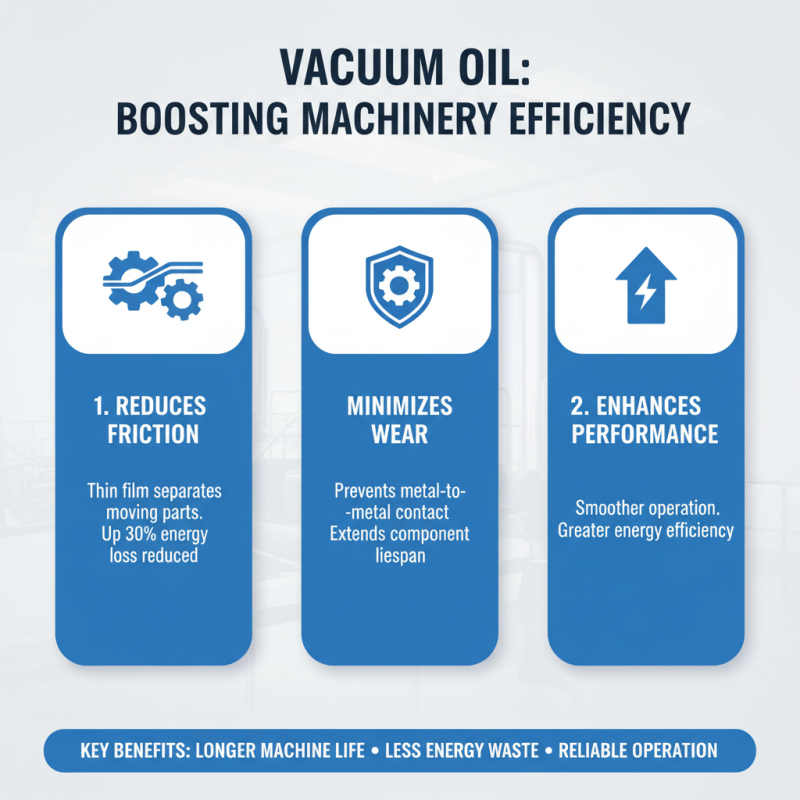
Vacuum oil plays a crucial role in enhancing the efficiency and longevity of industrial machinery. By creating a thin film between moving parts, it effectively reduces friction and wear. This reduction is vital as friction contributes to energy loss and premature component failure. Research indicates that friction can account for up to 30% of energy loss in industrial systems. Minimizing this friction fosters smoother operations and promotes energy efficiency, crucial for any production line.
Moreover, the ability of vacuum oil to sustain high temperatures is noteworthy. A study by the American Society of Mechanical Engineers highlighted that machines running at optimal temperatures can extend their service life by up to 40%. This endurance is essential in environments where machinery faces stress and strain. However, choosing the correct type of vacuum oil can be a challenge. Not all oils have the same properties, making it vital to consider specific operational demands.
Despite these benefits, relying solely on vacuum oil isn't without its drawbacks. Users may overlook regular maintenance checks, leading to oil breakdown. Regular monitoring of oil quality is essential to avoid degradation. Vacuum oil should not only be effective but also compatible with various materials used in machinery. Balancing these factors is critical for optimal performance. Maintaining this balance will ensure machinery operates smoothly, preventing costly downtimes.
Applications of Vacuum Oil in Metalworking and Cooling Processes
Vacuum oil plays a pivotal role in various industrial applications, particularly in metalworking and cooling processes. In metalworking, vacuum oil is essential for lubrication and machining operations. Reports indicate that the global demand for lubricants, including vacuum oils, is projected to reach 37 million tons by 2025, highlighting their significance in the industry.
In cooling processes, vacuum oil is used in heat transfer systems. Its low thermal conductivity and high boiling point make it suitable for maintaining optimal temperatures. The efficiency of cooling systems can be significantly improved with the right vacuum oil, and studies have shown an increase in system performance by up to 20% when using these specialized oils.
**Tip:** Choose vacuum oils based on the specific requirements of your machinery. Testing different oils can yield better performance.
The effectiveness of vacuum oil can vary greatly among different applications. It is crucial to regularly review oil quality. Contamination can lead to decreased efficiency and increased wear on machines. While vacuum oils are designed for durability, they require proper maintenance for optimal results.
**Tip:** Regularly monitor oil levels and change cycles to extend the lifespan of your machinery.
Applications of Vacuum Oil in Industrial Processes
Impact of Vacuum Oil on Energy Efficiency in Industrial Operations
Vacuum oil plays a pivotal role in enhancing energy efficiency in industrial operations. This specialized oil minimizes friction during the manufacturing process, which directly affects energy consumption. When machines operate smoothly, less energy is wasted. The result is lower operational costs and reduced environmental impact.
Tips for improving energy efficiency:
- Regular monitoring of oil viscosity.
- Choosing the right viscosity ensures optimal performance.
- Consider conducting frequent oil analysis to detect degrading properties.
- Understanding the characteristics of vacuum oil can lead to smarter equipment maintenance decisions.
Implementing these practices may reveal opportunities for improvement. However, inconsistencies in performance can arise from inadequate lubrication techniques. Companies should regularly review their lubrication strategies to identify potential shortfalls. By addressing these areas, businesses can significantly enhance their energy efficiency and operational effectiveness.
Quality Standards and Specifications for Vacuum Oils in Industry
Vacuum oil plays a significant role in various industrial applications. Understanding the quality standards and specifications for these oils is crucial for achieving optimal performance. Industries rely on vacuum oils for efficient operations, but not all oils meet the requisite standards. The American Petroleum Institute (API) sets critical benchmarks, specifying viscosity, thermal stability, and purity levels. These standards ensure that oils can withstand extreme conditions, maintaining their properties under high temperatures and low pressures.
It's essential to choose vacuum oils that adhere to ASTM D445 and ASTM D92 specifications. The viscosity index should be high, indicating stable performance. Oils with low vapor pressure are preferred, reducing losses during operation. There's an alarming trend of substandard oils entering the market, leading to equipment inefficiencies. In some surveys, over 30% of tested vacuum oils failed to meet industry benchmarks. This can result in costly downtimes and equipment damage.
**Tips:** Always check the certification of vacuum oils. Performing regular checks can prevent issues. When in doubt, consult lubrication experts for guidance on selecting high-quality oils.
Why is Vacuum Oil Essential for Industrial Applications?
| Property |
Importance |
Standard Specification |
Common Applications |
| Viscosity |
Ensures optimal flow properties for lubrication |
ISO VG 32 to 68 |
Vacuum pumps, CNC machines |
| Flash Point |
Prevents ignition and ensures safety during operation |
Minimum 180°C |
Industrial furnaces, dehydration applications |
| Pour Point |
Ensures oil remains fluid in cold conditions |
Maximum -30°C |
Cryogenic applications, refrigeration systems |
| Water Content |
Minimizes corrosion and degradation |
Less than 0.1% by volume |
Oil storage tanks, process equipment |
| Acidity |
Reduces the risk of oil degradation |
Maximum 0.1 mg KOH/g |
Hydraulic systems, lubrication |
Trends in Vacuum Oil Usage: Market Demand and Technological Advances
Vacuum oil plays a crucial role in various industrial applications, particularly in enhancing operational efficiency. Recent market studies indicate a growing trend in vacuum oil usage, driven by technological advancements. According to a report by Market Research Future, the global vacuum oil market is expected to reach $1.5 billion by 2025, with a compound annual growth rate of 4.2%. This reflects rising demand across sectors like manufacturing and aerospace.
Innovations in vacuum oil technology have significantly improved performance and application versatility. For example, the integration of advanced additives has enhanced the thermal stability of vacuum oils, making them more effective under extreme conditions. Recent data shows that nearly 30% of industries are now adopting new formulations to optimize processes. However, challenges remain. Companies must balance cost-effectiveness with quality, as lower-quality oils can lead to equipment failures and increased downtime.
The increasing focus on sustainability is shaping market trends as well. Industries are seeking eco-friendly lubricants to reduce their environmental impact. Reports indicate that about 40% of companies are exploring biodegradable options. This shift highlights the need for continuous innovation in vacuum oil production. As the industry evolves, the focus must remain on both efficiency and responsible sourcing.